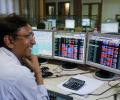
Equity benchmarks mustered gains for the first time this week on Thursday as investors piled into the recently-battered metal, bank and IT stocks amid expiry of monthly derivative contracts. Snapping its three-session losing streak, the 30-share BSE Sensex rallied 503.27 points or 0.94 per cent to settle at 54,252.53. On similar lines, the broader NSE Nifty gained 144.35 points or 0.90 per cent to end at 16,170.15.

Prominent exits by promoters included a Rs 15,300 crore share sale in Indus Tower by Vodafone Plc, a Rs 9,300 crore share sale by the Tata group in Tata Consultancy Services.
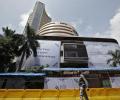
In the broader market, the S&P BSE Midcap added over 1% to finish at record closing high

Indian equity, forex, money and commodity markets will remain closed today on account of Mahashivratri.

The index had risen over 585 points in the previous three sessions.

The S&P BSE Midcap and the S&P BSE Smallcap indices under-performed to lose 0.8% and 1.6%

The NSE Nifty ended at 5,961, down 13 points. The BSE Midcap and Smallcap indices gained over 1% each at 9117 and 11,531, respectively. The market breadth was extremely bullish - out of 2,903 scrips traded, 2,060 logged gains.

PowerGrid was the top gainer in the Sensex pack, rallying over 4 per cent, followed by NTPC, UltraTech Cement, Tech Mahindra, Reliance Industries and IndusInd Bank.

Investors' wealth fell by Rs 2.89 lakh crore in two days of market fall, with the BSE Sensex tumbling 796 points on Wednesday, amid weak global market trends ahead of the US Federal Reserve's interest rate decision. Fresh foreign fund outflows and caution ahead of a host of interest rate decisions from global central banks also added to the overall bearish trend. Besides, the US Fed meeting, the BoE (Bank of England) and the BoJ (Bank of Japan) are also scheduled to meet this week.

From the Sensex basket, Tata Motors, State Bank of India, Tata Steel, Power Grid, NTPC, Bajaj Finserv, Bajaj Finance and Asian Paints were the major laggards.

This year's tally is the second best ever after 2022 when 16 firms raised Rs 40,311 crore, led by LIC's biggest-ever IPO.
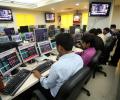
In the broader market, BSE Midcap and BSE Smallcap indices mirrored the gains in headline indices and rose 1% and 0.9% respectively.

'It is advisable to stay away from the markets for now and buy only on a dip.'

Benchmark indices bounced back on Wednesday after falling for five straight sessions, with investors snapping up the recently-mauled IT, finance and consumption stocks amid a supportive trend overseas. A rebounding rupee further bolstered sentiment, traders said. Halting its five-session slide, the BSE Sensex jumped 574.35 points or 1.02 per cent to finish at 57,037.50. Similarly, the NSE Nifty surged 177.90 points or 1.05 per cent to 17,136.55.
The markets have opened on positive note as global cues were strong
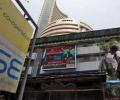
The S&P BSE Midcap and the S&P BSE Smallcap indices gained 0.3% and 0.5%, respectively
The markets opened smart but gave up some gains immediately witnessing volatility
The markets were flat in the opening trade but failed to sustain small gains as Asian peers were trading lower.

HCL Tech was the top loser in the Sensex pack, skidding over 4 per cent, followed by Tech Mahindra Dr Reddy's, Wipro, TCS, Titan and Infosys. NSE Nifty plunged 167.80 points to 17,110.15.

BSE Smallcap index outperformed the frontline indices to rise 0.6%, while the BSE Midcap was flat

The markets are showing no signs of stability as the economic impact of the coronavirus outbreak is likely to be significant for many major economies.

With markets getting back their mojo after four months, small- and mid-cap shares raced ahead of large caps in April. The Nifty Smallcap 100 index surged 7.5 per cent - its biggest monthly advance in 10 months - and outperformed the benchmark Nifty 50 index by 350 basis points. The Nifty Midcap 100 index soared 5.9 per cent, most since August.

In the broader market, the S&P BSE Midcap and the S&P BSE Smallcap indices gained 0.5% and 0.4%, respectively.

Tata Steel was the top loser in the Sensex pack, shedding over 2 per cent, followed by Sun Pharma, ICICI Bank, SBI, Kotak Bank and Dr Reddy's. NSE Nifty dropped 151.75 points to 15,727.90.

All Sensex components ended on a positive note with IndusInd Bank surging over 22 per cent, followed by Axis Bank, Mahindra and Mahindra, ICICI Bank, HUL, Maruti, HCL Tech and Hero MotoCorp.

All Sensex components ended in green, with Bajaj Finserv, HCL Tech, Bharti Airtel, IndusInd Bank, L&T, TCS, ONGC and ICICI Bank, Bajaj Finance and SBI gaining up to 6.64 per cent.

Bajaj Finance was the top laggard in the Sensex pack, skidding over 2 per cent, followed by Kotak Bank, Nestle India, HDFC, M&M and ICICI Bank. ONGC was the top gainer, rallying around 8 per cent. NTPC, Asian Paints, Tech Mahindra, PowerGrid and IndusInd Bank were among the other winners.

M&M was the top gainer in the Sensex pack, soaring around 7 per cent, followed by Bajaj Finserv, Bharti Airtel, PowerGrid, Infosys and ICICI Bank. On the other hand, HUL, Kotak Bank, Bajaj Finance and ITC were among the laggards.

Wall Street-correlated stock markets are facing the risk of correction, as Christopher Wood, the global head of equity strategy at Jefferies, conveys to investors in his latest edition of GREED & fear. Rising crude oil prices, which are nearing $100 a barrel (Brent), pose a threat to the global central bank's battle against inflation and have led to a re-evaluation of its exposure to Indian stocks. "The potential for more US Federal Reserve (Fed) rate hikes, combined with the risk that monetary tightening finally bites as regards the economy, remains a risk for Wall Street-correlated world stock markets. "There is also the oil factor. This is why GREED & fear continues to believe the pain trade is down. "Areas in Asia, such as Indian midcaps, which have already done very well, are at obvious risk of some profit-taking," writes Wood.

Notwithstanding concerns about lofty valuations, smallcaps recorded their most significant monthly gain in nearly three years in November. The National Stock Exchange Nifty Smallcap 100 finished the month with a 12 per cent gain, the most since February 2021 when it rose by 12.2 per cent. After declining by 4.1 per cent in the preceding month, the Nifty Midcap 100 rose by 10.4 per cent, the most since July 2022.

BSE Midcap and BSE Smallcap outperformed the frontline indices to gain 0.2% and 0.3%
S&P BSE Midcap and the S&P BSE Smallcap indices gained 2% and 1.6% respectively
The S&P BSE Midcap and S&P BSE Smallcap indices gained 0.4% and 1%, respectively

In the broader market, the BSE Midcap was down 0.2%, while BSE Smallcap fell 0.1%.

Higher valuation creation in companies beyond the top 100 has given the domestic markets a shot at a $4 trillion market capitalisation (mcap) - a club exclusive to three countries currently. On November 23, the mcap of all BSE-listed stocks finished at a new record of Rs 328.33 trillion ($3.94 trillion), despite the benchmark indices ending with losses. The mcap was propelled by gains in the broader market, including small and midcap stocks - a trend dominant this year.

New fund offers collection in the current calendar year was the highest in a decade, with 13 of the 70 equity schemes cornering 75 per cent of the amount raised.
Other gainers include ONGC, Bajaj Auto, Kotak Bank, TCS, Tata Steel, Axis Bank, Maruti, HDFC and HUL, surging up to 3.03 per cent.

'Investors need to be stock specific and should not rush to buy stocks at the current levels.'
The general elections in April/May 2024 are expected to add volatility to the Indian markets, keeping investors on their toes.
 © 2026 Rediff.com - Advertise with us - Disclaimer - Privacy Policy - Sitemap - Feedback - About us - Terms of use - Grievances